Heat-resistant landscaping in Arizona is mostly about surface temperature and shade, not plant selection. Dark, dense, unshaded materials — gravel, pavers, concrete, and turf alike — all get far hotter than air temperature in direct sun. Shade is the single most effective intervention available, and it improves every other choice you make underneath it.
What Extreme Heat Does to a Yard
Sustained temperatures above 110°F affect a landscape in three separate ways, and they're worth separating because they have different solutions.
Plant stress. Heat accelerates evaporation and pushes non-adapted plants past what irrigation can compensate for. This is the failure mode most people plan for, and it's the easiest to solve with species selection.
Material degradation. UV exposure fades and embrittles almost everything over time — furniture, shade fabric, plastics, low-grade synthetic turf backing. Arizona is one of the harshest UV environments in the country.
Surface temperature. This is the one that determines whether the yard gets used, and it's the one most often overlooked at design time.
Surface Temperature Is the Real Issue
On a 110°F afternoon, air temperature is the least of it. Hard surfaces in direct sun absorb solar radiation and run substantially hotter than the air around them — concrete, pavers, decomposed granite, dark gravel, and synthetic turf all do this to varying degrees.
This matters for two reasons. It's a comfort and safety question for bare feet and for dogs' paws, and it's a microclimate question: hot surfaces radiate heat back into the space around them, which makes a patio feel worse than the forecast suggests.
The practical consequences are worth designing around:
- Lighter-coloured materials absorb less than dark ones.
- Any surface in full afternoon sun will be hot regardless of what it's made of.
- The same material in shade can be dramatically cooler — this is the largest single lever available.
- Where pets and children are barefoot, plan the route as well as the destination.
We measured this specifically for synthetic grass in how hot does artificial grass get.
Shade Does More Than Any Material Choice
If there is one principle for heat-resistant landscaping in Arizona, it's that shade beats material selection every time. A shaded surface — whatever it's made of — is usable. An unshaded one often isn't, no matter how carefully specified.
- Trees. The best long-term option. Desert-adapted species like palo verde, mesquite, and ironwood give filtered shade without heavy water demand. They take years, which is the argument for planting now.
- Structures. Pergolas, ramadas, and covered patios deliver shade immediately and can be placed exactly where it's needed. A pergola over a seating area changes how many months of the year that area gets used.
- Shade sails. Cheaper and faster than a structure, and effective — but they're consumables in this UV, so budget to replace the fabric periodically.
- Orientation. West-facing surfaces take the worst of the afternoon. If you're choosing where to put a seating area or a play surface, that choice is worth more than the material spec.
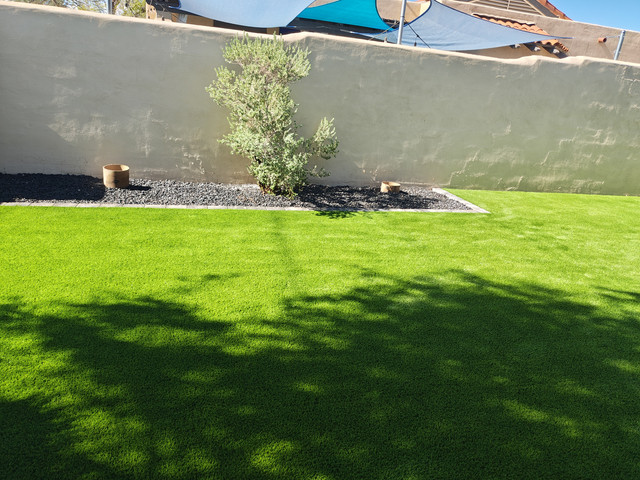
Shade also compounds: it reduces plant water demand, slows material degradation, and lowers surface temperature all at once.
Choosing Materials That Hold Up
- Pavers over poured concrete where you can. They handle thermal movement better and a damaged section can be lifted and replaced rather than recut.
- Lighter tones for any large hardscape area in sun.
- UV-stable everything. Furniture, fixtures, and turf backing all need to be specified for this climate. Products that last a decade elsewhere fail faster here.
- Quality synthetic turf. Cheap turf is where Arizona heat shows up first — backings become brittle and fibres lose colour. Product grade matters more here than in milder climates. See the best artificial turf for Arizona.
- Avoid dark gravel in high-traffic areas. It's inexpensive and water-free, but it stores and re-radiates a lot of heat.
Where Artificial Turf Fits
Artificial grass is a reasonable heat-resistant choice, provided it's chosen and placed honestly.
It will be warmer than natural grass in direct sun — natural grass cools itself through transpiration, and synthetic grass has no equivalent. Anyone who tells you otherwise is selling. What it does offer is that it stays usable and green with no irrigation at all, in a climate where keeping natural grass alive through July is expensive and often unsuccessful.
Three things meaningfully reduce how hot a turf lawn runs: shade over it, an infill chosen for heat performance rather than price, and a quick rinse before use, which drops the surface temperature immediately. Placement matters most — turf under a tree or a pergola behaves very differently from turf in open west-facing sun.
Plants That Survive a Phoenix Summer
Species selection is the easiest part of heat-resistant design, because the Sonoran Desert has a deep native palette that needs no help from anyone.
- Structure: agave, ocotillo, desert spoon, barrel cactus
- Colour: red yucca, brittlebush, globe mallow, desert marigold
- Shrubs and screening: Texas ranger, jojoba, creosote
- Trees: palo verde, mesquite, ironwood, acacia
Group them by water need, mulch the beds, and use drip rather than spray. That combination handles the heat and the water question together — the subject of our drought-resistant landscaping guide.
Frequently Asked Questions
What's the coolest ground surface for an Arizona yard?
Living ground cover in shade is coolest, followed by light-coloured shaded hardscape. In full afternoon sun, every option is hot — which is why shade is the first decision, not the last.
Does artificial turf get too hot for dogs?
In direct summer sun it can be uncomfortable, as can pavers, concrete, and gravel. Shade over the area, a heat-conscious infill, and a rinse before use all help. Walking dogs early or late is sensible regardless of surface.
Is gravel cooler than artificial grass?
Generally no. Dark gravel in particular absorbs and re-radiates a great deal of heat. Colour and shade matter more than which of the two you pick.
When should I plant desert trees?
Autumn and early spring give roots time to establish before summer. Trees are the highest-value heat intervention available, so earlier is better.
Will Arizona sun fade my landscaping?
Over time, yes — UV here is intense. Specifying UV-stable materials and quality turf slows it considerably, and shade slows it further.